In Diablo IV Season 10, the Galvanic Azurite Sorcerer has quickly become one of the strongest and most popular builds for players looking to dominate the battlefield with lightning-fast attacks and devastating spells.
This build focuses on harnessing the power of lightning and thunder, letting you chain Lightning between multiple enemies and deal massive AoE damage. If you enjoy a fast-paced, aggressive playstyle, this is definitely the build for you.
What really sets the Galvanic Azurite Sorcerer apart is the combination of high burst damage, crowd control, and mobility. Lightning-based spells can stun and slow enemies, giving you full control of the battlefield and letting you dictate the pace of combat.
With these Diablo 4 items, you’ll be zipping across the battlefield, chaining lightning across enemies, and controlling every fight. Whether it’s clearing mobs or taking down bosses, this build delivers pure, electrifying chaos.
Category
Tips
Key Features
– Fast-paced gameplay with lightning-fast spellcasting- High burst damage and AoE capabilities- Crowd control and mobility for superior battlefield control- Synergies with lightning-based gear for maximum effectiveness
Gear Selection
Focus on lightning-based affixes to boost damage. Look for items with:- Increased lightning damage- Spellcasting speed- Cooldown reduction
Skill Rotation
– Chain lightning spells to maximize damage- Use AoE spells for groups- Switch to single-target spells against tougher enemies
Positioning
– Stay mobile to avoid attacks- Monitor surroundings constantly- Reposition as needed to maintain battlefield control
Cooldown Management
– Track your spell cooldowns carefully- Save your strongest spells for key moments- Time bursts for maximum impact
The Galvanic Azurite Sorcerer in Diablo IV Season 10 delivers an exhilarating and high-powered gameplay experience for anyone who loves lightning-based spells and massive burst damage. By fine-tuning your gear, honing your skills, and perfecting your playstyle, you can command the battlefield and come out on top in every challenge across Sanctuary.
Call of Duty: Modern Warfare II is one of the most ambitious titles in the history of the franchise. Developed by Infinity Ward and released on October 28, 2022, it serves as a direct sequel to Call of Duty: Modern Warfare (2019). It is also the nineteenth entry in the legendary Call of Duty series, marking a huge milestone for the franchise and setting the stage for future games like COD BO7.
Available across PlayStation 4, PlayStation 5, Xbox One, Xbox Series X/S, and Microsoft Windows, the game brought both innovation and nostalgia. Notably, this was the first Call of Duty title since Black Ops 4 (2018) to return to Steam, making it highly accessible for PC players.
Development History
The development journey of Modern Warfare II was full of hype and strategic reveals:
February 11, 2022 – First confirmation of a Modern Warfare sequel and a new Warzone experience.
April 28, 2022 – The official logo was revealed, confirming the title.
May 24, 2022 – An “Artwork Reveal” trailer announced the release date.
June 8, 2022 – The highly anticipated World Gameplay Reveal dropped.
August 16, 2022 – Campaign early access announced for October 20, 2022.
September 15, 2022 – At Call of Duty NEXT, the multiplayer was officially showcased alongside Warzone 2.0.
Additionally, Modern Warfare II became the foundation of the Call of Duty HQ launcher. However, on July 29, 2025, it was removed from the hub and re-released as a standalone title. This move streamlined the player experience and separated it from future updates tied to COD BO7.
Campaign & Storyline
The campaign of Modern Warfare II dives deeper into the origins of Simon “Ghost” Riley, one of the franchise’s most iconic characters. The narrative explores his mysterious past, the story behind his skull mask, and key events that lead up to his time in Task Force 141.
The story is a mix of covert operations, large-scale conflicts, and personal struggles, offering players a more emotional connection to characters than in previous titles.
Character Roster (Table Format)
The game features an impressive cast of characters across multiple factions. Here’s a detailed table:
Faction
Key Characters
Task Force 141
John Price · Kyle “Gaz” Garrick · Johnny “Soap” MacTavish · Simon “Ghost” Riley
This blend of realistic soldiers, villains, and crossover celebrity/operator skins highlights just how expansive Modern Warfare II has become.
Multiplayer Innovations
The multiplayer component of Modern Warfare II was one of its strongest selling points, introducing groundbreaking features that redefined the COD experience.
1. Gunsmith 2.0 – Weapon Platforms
Weapons are grouped into Platforms.
Unlocking one weapon allows shared attachments across the platform.
Introduced universal attachments usable across all weapons.
This system made progression smoother and more rewarding, giving players flexibility in customization.
2. New Perk System – Perk Packages
Each player starts with two Base Perks.
Over time, unlocks Bonus Perk and Ultimate Perk mid-match.
Progress accelerates via kills, assists, and objective plays.
This dynamic perk progression rewards aggressive and tactical gameplay alike.
3. Vehicle Combat Overhaul
Vehicles now have destructible parts: doors, bumpers, and even tires can be blown out.
Different ground vehicles added variety, especially in Ground War maps.
4. Swimming & Aquatic Combat
Players can now swim and fight underwater.
Certain water vehicles provide tactical mobility, opening new layers of strategy.
5. Realism & Tactical Depth
Enhanced gun handling and graphical upgrades deliver unmatched immersion.
Gameplay blends arcade-style action with realism, raising the bar for future COD titles, including COD BO7.
Why Modern Warfare II Still Matters in 2025
Even though Modern Warfare II launched in 2022, it continues to be relevant in 2025 due to its lasting impact on the franchise. The revamped Gunsmith, improved multiplayer mechanics, and unforgettable campaign have shaped the blueprint for COD BO7 and beyond.
Fans who revisit the game today will find a polished and content-rich experience, full of crossovers, evolving seasonal updates, and a strong connection to Warzone.
As the community looks forward to the release of COD BO7, it’s clear that many of the systems pioneered in Modern Warfare II laid the foundation for the future of the franchise. Players eager to dive deeper into the competitive scene or enhance their multiplayer experience often look for ways to gain an edge, and one popular option has been to buy COD BO7 lobby access once the new title launches. Whether you’re a casual fan or a long-time veteran, the innovations of Modern Warfare II ensure that the Call of Duty legacy remains stronger than ever.
Divination cards are among the most reliable ways to accumulate wealth in Path of Exile. Each complete card set can be exchanged for a powerful item, and knowing the best farming locations lets players maximize their returns. Success depends on balancing farming speed, drop rates, and the current market demand for specific cards—especially when considering sales for PoE 1 Currency.
The first step to efficient card farming is identifying maps that consistently drop valuable cards. Top choices include The Burial Chambers for The Doctor, City Square for The Fiend, and Glacier for The Nurse. These areas remain popular because their layouts support fast clearing, repeatable runs, and minimal downtime, making them perfect for generating steady income in the form of PoE 1 Currency.
To increase efficiency, players should aim for speed-oriented builds with strong clear potential. Ranged AoE skills like Tornado Shot, Lightning Arrow, or Toxic Rain are ideal for farming open maps where monster density is high. Melee players can still compete using Cyclone or Flicker Strike, but it is important to focus on mobility.
A crucial step in maximizing card farming is managing map modifiers. Avoid mods that significantly reduce clear speed or survivability. On the other hand, mods that increase pack size or monster density directly improve the chances of card drops. Sextants and scarabs can also be used to boost rewards further.
Another advanced technique is utilizing the Atlas passive tree to target specific map nodes. Players can specialize in Divination Card drops or monster quantity to dramatically increase the efficiency of farming. Choosing nodes that enhance map sustain ensures a consistent cycle without running out of preferred maps.
Players should also pay attention to the trading economy. Some cards may have high drop rates but low demand, while others, though rare, sell for substantial amounts. For example, The Doctor consistently remains one of the most profitable cards due to its connection to the Headhunter belt.
Consistency is the key. Rather than PoE Currency farming one area for a short time, commit to extended farming sessions to increase the odds of collecting complete card sets. Variance can cause dry streaks, but persistence almost always leads to profit.
In conclusion, farming Divination Cards is about preparation, strategy, and persistence. By choosing the right maps, building for speed, and tracking the trading market, players can turn farming into a steady income source.
Path of Exile (POE) is well-known for its intricate itemization and the constant juggling of inventory space. One of the features that keeps the game manageable is the stash system, which lets players organize and store the massive variety of items they collect throughout their journey. While the game starts you off with basic stash tabs, as you progress, investing in specialized tabs becomes almost essential to keep your currency, maps, gems, and fragments organized. However, there’s still one glaring omission: a dedicated stash tab for jewels PoE 1 Currency.
Currently, POE offers different stash tabs designed for specific item categories. The currency tab automatically organizes all orbs and crafting materials, saving players from the tedious task of sorting them manually. The gem tab collects active and support skill gems in one convenient place. Fragment and scarab tabs help with league-specific items, and premium quad tabs provide four times the space of regular tabs, making them ideal for general storage. But jewels—whether basic or unique—end up scattered among these tabs, making them difficult to manage. Since jewels can dramatically affect builds with their modifiers and radius effects, having them mixed with other items is inefficient and frustrating.
A dedicated jewel stash tab could solve this problem by automatically sorting all jewels into one centralized location. Players could filter by type, rarity, radius, or modifiers, making it much easier to compare jewels or find the ones they need for a specific build. For anyone experimenting with passive skill trees or trying multiple builds, this would be a game-changer. Instead of wasting time digging through cluttered tabs, players could focus on strategy, testing combinations, and improving their characters.
Beyond organization, a jewel tab could improve gameplay decisions. When all jewels are visible in a single place, it’s easier to see upgrade paths, plan passive skill tree adjustments, or spot jewels that synergize with a current build. Trading could also benefit, as sellers and buyers could quickly evaluate jewel properties without switching between multiple tabs. Endgame players, in particular, who accumulate large numbers of jewels over leagues, would see immediate value from this system.
If you look at other specialized tabs like currency or gem tabs, the jewel stash would fill a similarly important role. Just as the currency tab removes chaos from managing orbs, a jewel tab would remove the frustration and clutter associated with one of the game’s most strategically significant item types. With so many different jewels—from simple boosts to game-changing uniques that affect entire passive nodes—having them organized is crucial for advanced planning and experimentation.
In practice, a jewel stash tab wouldn’t just save time; it would allow players to focus more on gameplay and build optimization rather than micromanaging inventory. It aligns with POE’s complexity, giving a tool as sophisticated as the jewel system itself. For players who love tinkering with passive trees, collecting unique jewels, or optimizing endgame setups, this feature would be a natural and welcome addition.
In short, the demand for a jewel stash tab comes from the need for better item organization, smoother build planning, and easier trading buy PoE Currency. While POE already offers helpful tabs for currency, gems, and fragments, jewels remain underserved. A dedicated jewel tab could save players significant time, reduce frustration, and make one of the game’s most important item classes far easier to manage. It’s a quality-of-life improvement that many in the community have been asking for, and it would be a meaningful addition in a future update.
If you’re diving into the world of Warborne Above Ashes, obtaining Solarbite is a key part of leveling up and enhancing your gameplay. Many players wonder how to efficiently gather this valuable resource. One of the most straightforward methods is to buy Warborne Solarbite from trusted marketplaces. This approach saves time and ensures that you receive a legitimate amount without risking scams or unreliable sources.
Another easy way to collect Solarbite is by completing daily quests. These quests often reward players with Solarbite or items that can be exchanged for it. By consistently tackling these missions, you can steadily build your resources while also gaining experience and in-game currency, making it a reliable method for all types of players.
Exploring the game world thoroughly is also an effective strategy. Warborne Above Ashes Solarbite is often hidden in secret areas, enemy camps, or treasure chests scattered throughout the map. Players who take the time to explore can uncover substantial amounts without spending real money. Combining exploration with efficient combat techniques can multiply your Solarbite gains.
Participating in special in-game events and challenges is another way to acquire Solarbite. Events are usually time-limited and offer generous rewards for completing specific objectives. Engaging in these challenges not only increases your Solarbite stock but also allows you to enjoy unique gameplay experiences that might not be available in regular play.
Lastly, consider trading with other players. The Warborne Above Ashes community often facilitates safe trading opportunities. By exchanging items you no longer need for Solarbite, you can optimize your inventory and gain the resources necessary to progress faster. Always ensure that trades are conducted through secure channels to avoid potential fraud.
By following these five methods—buying, completing daily quests, exploring the world, participating in events, and trading—you can efficiently gather Solarbite in Warborne Above Ashes. Each approach offers its own benefits, and combining them can help you maximize your resources while enjoying a well-rounded gaming experience.
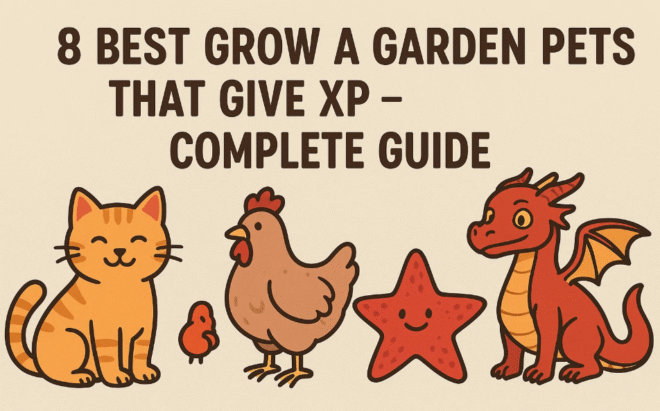
In Grow A Garden, pets are more than just cute companions—they’re powerful allies that help you level up faster. Some pets specialize in farming resources, while others shine when it comes to boosting your XP gains. If you’re trying to maximize progress without grinding endlessly, choosing the right XP-giving pets makes all the difference.
This guide breaks down the 8 best Grow A Garden pets that give XP, along with tips on how to use them effectively. Whether you’re browsing the grow a garden shop or looking to buy grow a garden pets cheap, knowing which ones are worth the investment will save you a lot of time.
1. Bunny
The Bunny is one of the earliest pets that helps with XP gain. Its bonus may seem small at first, but it stacks up when paired with multiple mutations. Great for beginners who want a steady source of progression.
2. Cat
Cats provide consistent XP rewards, especially when placed in farms with matching crops. They’re easy to acquire early on and remain useful for casual players who don’t want to micromanage their setup.
3. Dog
The Dog is a versatile pet that balances resource farming with XP. If you’re building a mixed farm that doesn’t rely solely on XP-focused pets, the Dog is a reliable choice.
4. Chicken
Chickens stand out for their strong XP scaling as you level them up. They work best when combined with farming bonuses, allowing you to gain experience without sacrificing efficiency.
5. Raccoon
Raccoons may not be as common, but they’re fantastic for grinding XP in mid-game. If you’re checking the grow a garden shop, look out for raccoons, as they often appear with good value compared to their XP output.
6. Starfish
Starfish pets are underrated, but they provide excellent long-term XP boosts. Many players overlook them in favor of flashy pets, but investing in a Starfish early can give you a steady advantage.
7. T-Rex
The T-Rex is one of the more powerful pets for XP farming. While harder to get, it’s worth prioritizing if you can buy grow a garden petscheap during seasonal events or special offers. Its XP output is unmatched in late-game setups.
8. Red Dragon
Dragons are among the rarest and most rewarding pets in the game. The Red Dragon’s XP bonus is massive, making it a top-tier choice for endgame farming. While it takes dedication to unlock, once you have it, your leveling speed skyrockets.
Focus on combining pets with complementary traits to maximize your XP gains.
Keep an eye on the grow a garden shop for limited-time pet offers. Sometimes you can buy grow a garden pets cheap and save resources while building an optimized lineup.
Don’t ignore early pets like the Bunny or Chicken—stacking them early on creates momentum that carries into late game.
By prioritizing these pets, you’ll speed up your progression and unlock more content in Grow A Garden without feeling stuck in a grind.
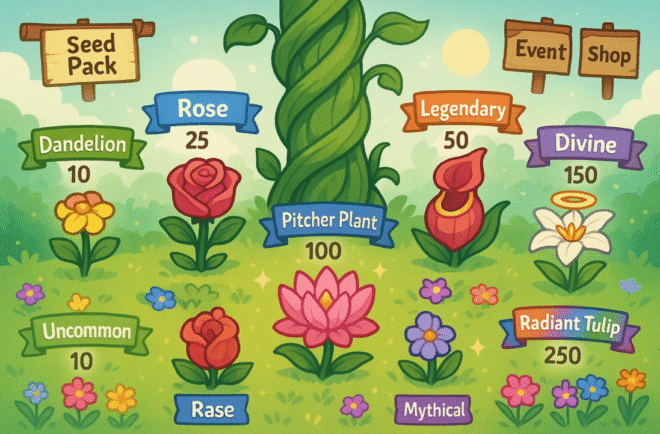
In Grow a Garden, Flower Plants are more than just decorative—they are essential for participating in the Beanstalk Update event. Jack’s magic sprout requires specific flowers, and the type he requests changes regularly. Feeding him the correct plant rewards you with points that help grow your Beanstalk, unlocking special items, seeds, and exclusive rewards. Understanding each Flower Plant, its rarity, and how to obtain it is key to maximizing your progress.
Understanding Flower Plant Rarity
Flower Plants are categorized by rarity, which affects the points they provide when fed to Jack. The rarer the flower, the more points it gives:
Uncommon: 2 points
Rare: 3 points
Legendary: 4 points
Mythical: 5 points
Divine: 6 points
Prismatic: 7 points
Higher rarity flowers are harder to obtain but are essential for achieving higher scores in the Beanstalk event.
How to Get Flower Plants
Flower Plants can be acquired from various sources:
Seed Packs: Many flowers come from basic or themed seed packs. Examples include Sprout Seed Pack, Zen Seed Pack, or Exotic Flower Seed Pack.
Event Exclusives: Some flowers are only obtainable during special events. Keep an eye on seasonal events and updates.
Seed Shop & Merchant Shops: Certain flowers can be purchased directly using in-game currency or Robux.
Crafting & Quests: Some rare flowers require crafting or completing special quests like Bizzy Bear’s quest.
Unknown / Special Sources: A few flowers are not always available and may rotate in availability.
All Flower Plants and How to Get Them
Flower Plant
Rarity
Points Added
How to Get It
Artichoke
Uncommon
2
Event Exclusive
Flare Daisy
Uncommon
2
Sprout Seed Pack
Orange Tulip
Uncommon
2
Seed Shop
Rose
Uncommon
2
Exotic Flower Seed Pack
Manuka Flower
Uncommon
2
Event Exclusive / Bizzy Bear’s quest
Monoblooma
Uncommon
2
Zen Seed Pack
Crocus
Uncommon
2
Crafters Seed Pack
Nightshade
Uncommon
2
Night Seed Pack
Lavender
Uncommon
2
Event Exclusive
Daffodil
Rare
3
Seed Shop
Zenflare
Rare
3
Event Exclusive
Foxglove
Rare
3
Flower Seed Pack
Serenity
Rare
3
Zen Seed Pack
Succulent
Rare
3
Crafters Seed Pack
Liberty Lily
Rare
3
Event Exclusive
Lilac
Legendary
4
Exotic Flower Seed Pack
Rafflesia
Legendary
4
Summer Merchant Shop
Firework Flower
Legendary
4
Event Exclusive
Taro Flower
Legendary
4
Zen Seed Pack
Hinomai
Legendary
4
Zen Seed Pack
Moonflower
Legendary
4
Night Seed Pack
Veinpetal
Legendary
4
Event Exclusive
Purple Dahlia
Mythical
5
Exotic Flower Seed Pack
Pink Lily
Mythical
5
Flower Seed Pack
Moon Blossom
Mythical
5
Night Seed Packs
Parasol Flower
Mythical
5
Summer Seed Packs
Lily Of The Valley
Mythical
5
Summer Shop
Honeysuckle
Mythical
5
Seed Crafting Table
Grand Volcania
Divine
6
Event Exclusive
Rosy Delight
Divine
6
Summer Seed Pack
Sunflower
Divine
6
Flower Seed Pack
Lotus
Divine
6
Basic Seed Packs
Candy Blossom
Divine
6
Easter Event Shop
Burning Bud
Prismatic
7
Seed Shop
Ember Lily
Prismatic
7
Seed Shop
Pink Tulip
Uncommon
2
Unknown
Bee Balm
Rare
3
179 Robux
Stonebite
Rare
3
Rainbow Sack
Candy Sunflower
Rare
3
Easter Event
Cherry Blossom
Legendary
4
Seed Shop
Noble Flower
Legendary
4
Unknown
Soft Sunshine
Legendary
4
Zen Shop
Tips for Growing Your Beanstalk Efficiently
Keep a Flower Inventory: Always stock the flowers Jack frequently requests, especially rare or legendary ones.
Participate in Events: Seasonal events often reward exclusive flowers that give higher points.
Use Seed Packs Wisely: Prioritize packs that have flowers you are missing for your Beanstalk progress.
Plan for Rarity Points: Feeding higher rarity flowers first can help you maximize your points quickly.
To make the most of the Beanstalk Update and feed Jack’s magic sprout efficiently, it’s important to know every Flower Plant type, their rarity, and how to obtain them. Stock up on the flowers you need, participate in special events, and don’t forget—you can also buy Grow A Garden items to complete your collection faster and boost your points. With the right strategy, your Beanstalk will flourish, unlocking exciting rewards along the way.
As Diablo 4 prepares to launch its much-anticipated Season 10, Blizzard has released a Public Test Realm (PTR) patch that brings sweeping balance updates across all classes. These changes are more than just number tweaks — they aim to redefine class diversity, smooth out power imbalances, and refresh the gameplay experience for veterans and newcomers alike. Below, we break down the most important class adjustments and what they mean for players heading into the new season.
Barbarian: Damage Gains and Survivability Shifts
The Barbarian receives a mix of buffs and trims designed to keep Diablo 4 Items the class competitive without tipping into dominance. Core attacks now hit harder, particularly in single-target encounters, giving Barbarians more consistency in boss fights. However, some of the most durable defensive mechanics have been scaled back, preventing the class from becoming virtually unkillable in high-tier content. The result is a balanced but still formidable frontline option.
Sorcerer: More Variety, Less Dependence
The Sorcerer once again sees extensive adjustments, focusing on creating healthier build diversity. Blizzard has toned down certain over-performing cooldown abilities, while improving synergy between elemental paths. Fire and Ice now work more fluidly together, rewarding hybrid playstyles instead of forcing players into one-dimensional builds. Overall, Sorcerers remain a top choice for players who value explosive damage, but now with richer tactical depth.
Rogue: Faster, Smoother Combat
The Rogue retains its identity as the speed-driven assassin, but its toolkit has been smoothed out for greater consistency. Energy regeneration improvements help reduce downtime, while ranged abilities received notable damage buffs. This narrows the gap between ranged and melee builds, ensuring both archetypes remain viable. With high mobility and polished scaling, Rogues are poised to be a powerhouse in both solo play and group content.
Druid: Finally Rising to the Spotlight
For several seasons, Druids struggled to keep pace with other classes. Season 10 changes aim to fix that. Shapeshifting builds see significant damage boosts, allowing Druids to shine in melee-oriented combat. On top of that, companion AI has been upgraded, making summon-focused builds far more reliable. With these changes, Druids may finally step out of their underdog status and become a strong pick for endgame play.
Necromancer: Summons Toned Down, Spells Powered Up
Necromancers continue to be one of Diablo 4’s most debated classes. In the PTR, skeletal minions lose some survivability, curbing the overreliance on summon armies. To compensate, Shadow and Poison spells have been buffed, encouraging more diverse playstyles. By shifting focus away from minions, Blizzard is nudging Necromancer players toward creative builds that lean on spellcasting power as much as their undead forces.
How These Changes Affect the Meta
Blizzard’s intention is clear: reduce reliance on dominant builds and create room for experimentation. For instance, Sorcerers no longer rely solely on one ultimate cooldown, while Druids are finally competitive in both shapeshifting and companion builds. The meta heading into Season 10 will likely feel fresher, with more classes able to perform at high levels without falling into narrow, repetitive patterns.
Adapting to Season 10’s Adjustments
Players should approach the new season with flexibility. Instead of sticking rigidly to last season’s strongest builds, experiment with adjusted skills and synergies. Early PTR testing already suggests that classes like Druid and Rogue may rise significantly in power, while Necromancers will benefit most from hybrid spell-summon play. Preparing different loadouts ahead of launch could be the difference between smooth progression and frustrating setbacks.
The Season 10 PTR balance update marks one of the most meaningful adjustments in Diablo 4 so far. Barbarians remain sturdy, Sorcerers gain diversity, Rogues get smoother combat flow, Druids rise to new heights, and Necromancers are reimagined for Diablo 4 Items for sale flexibility. With Blizzard reshaping the power curve across the board, players can expect a season that emphasizes variety, strategy, and adaptability. If these PTR changes carry through to live servers, Season 10 could deliver one of the most dynamic Diablo experiences yet.
The Warrior – Ancestral Commander build is all about summoning strong ancestral warriors to fight alongside you. These warriors do a ton of damage and also help out with buffs and crowd control, making them your trusty squad on the battlefield. With this setup, you can blast through groups of enemies fast and feel like a real commander leading the charge.
How to master the Warrior To excel with the Warrior – Ancestral Commander build in Path of Exile, you’ll want to focus on skill gems that amplify your ancestral warriors’ abilities. Essential gems like Ancestral Warchief, Melee Physical Damage, and Multistrike are key to maximizing your damage output. Additionally, investing in passive skills that enhance your minions’ strength, attack speed, and survivability will ensure they can hold their ground against even the toughest bosses.
Gear plays a vital role in boosting the effectiveness of your Warrior – Ancestral Commander build. Look for items that increase your minions’ damage, attack speed, and health pool. Unique items such as Facebreaker and Abyssus can significantly elevate your warrior’s performance, turning them into formidable allies on the battlefield. Remember to upgrade and craft your gear regularly to stay ahead of the increasing difficulty of enemies.
If you’re looking to enhance your build further, consider investing in Path of Exile 1 Currency—such as Orbs of Alteration, Chaos Orbs, or Exalted Orbs—to acquire powerful gear and rare items. Using POE 1 Currency wisely can help you craft and upgrade your equipment more efficiently, giving your Ancestral Commander the edge needed to dominate the Gauntlet and beyond.
When starting out with the Warrior – Ancestral Commander build, focus on leveling up your essential gems and passive skills. As you progress through the game, prioritize items with bonuses to minion damage and attack speed to ensure your warriors remain a force to be reckoned with.
The Warrior – Ancestral Commander build is a powerful and popular choice in Path of Exile 3.26 for a good reason. By mastering this build, you can become a formidable force on the battlefield, leading your ancestral warriors to victory against all odds.
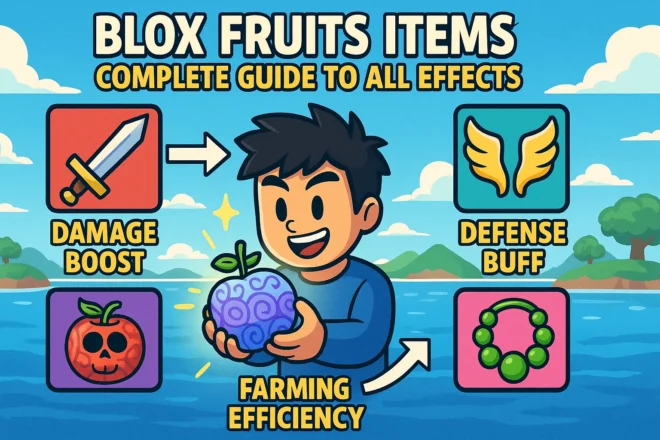
If you’ve spent any time exploring Blox Fruits, you already know that items can make or break your experience. From swords and accessories to fruits themselves, each item comes with unique effects that shape your playstyle. Understanding these effects is key to optimizing your build, farming efficiently, or holding your ground in PvP battles. This guide covers all major item effects in Blox Fruits so you’ll know exactly what to aim for.
1. Fruits and Their Elemental Powers
The core of the game lies in Blox Fruits themselves. Each fruit grants special abilities tied to elements such as fire, ice, or light. The effects vary widely—Logia fruits, for instance, give you immunity to certain non-haki attacks, while Paramecia and Zoan fruits provide versatile offensive and defensive skills. Choosing the right fruit effect can completely shift your combat style.
2. Weapons and Damage Scaling
Weapons in Blox Fruits scale differently based on stats and upgrades. Swords like Saber or Shisui provide critical strike effects, while guns often offer long-range elemental damage. Certain weapons even synergize with fruits, creating devastating combos. Players often test multiple builds to find the right balance of weapon damage and fruit abilities.
3. Accessories and Buff Effects
Accessories may not look flashy, but their effects can significantly boost your stats. Some accessories increase health or defense, while others improve speed or damage output. Items like the Hunter Cape or Bandanna are highly sought after because of their lasting buffs in both PvP and grinding scenarios.
4. Sea-Related Items
The seas in Blox Fruits are filled with challenges, and special sea items provide unique effects to help. Whether it’s improved ship durability or faster travel, these items give players a huge edge when hunting sea events or taking on raids.
5. Grinding and Progression Effects
Certain items are specifically useful for leveling faster. Swords with area-of-effect skills or fruits with crowd control effects make farming mobs much more efficient. Accessories that reduce stamina consumption also help during long grinding sessions, allowing players to push further without constant breaks.
6. Trading and Value Effects
The trading scene is another area where item effects matter. Rare fruits or limited items can drastically affect market value. Many players search for blox fruits items for sale to speed up progression, while others prefer to invest time farming for rare drops. Understanding the relative worth of each item effect can give you a serious advantage in trades.
7. Choosing the Right Build
The best way to approach item effects is to think about your long-term build. If you’re focusing on PvP, prioritize items with damage buffs, speed, and fruit synergy. For grinding, aim for fruits with high farming efficiency and accessories that improve stamina. Some players even look to buy blox fruit account pre-loaded with strong items and fruits, although building your own character is often the most rewarding path.
Every item in Blox Fruits comes with an effect that can either boost your performance or open new strategies. Whether you’re farming, trading, or battling other players, understanding these item effects will help you make smarter decisions. Keep experimenting with combinations, and you’ll quickly find the setup that works best for your style.