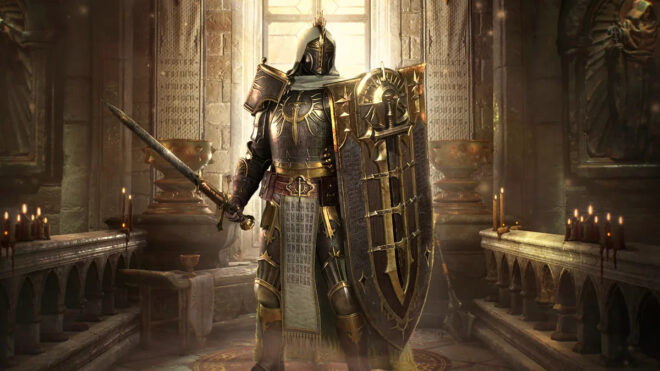
Diablo 4 Season 12 Spear of the Heavens Judgement Paladin Build Guide

In Diablo 4 Season 12, the Spear of the Heavens Judgement Paladin has become one of the more fun and effective ranged builds to play. It hits hard, sustains well, and doesn’t require a super complicated rotation to get good results. The whole setup revolves around using Spear of the Heavens together with Judgement mechanics, then boosting everything with the right Uniques and Aspects. When it’s working properly, you’re basically chaining big AoE hits while staying surprisingly durable Diablo 4 Items.

Most of your damage comes from how often you can trigger Judgement and reset your cooldowns. You go into Arbiter of Justice, build up buffs like Aspect of Celestial Strife and Aspect of Ascension, then start dropping Spear of the Heavens into packs. At the same time, you’re applying Judgement through skills like Reach of the Law and Holy Light Aura. Once those marks start detonating—especially if you speed it up with Blessed Hammer—they quickly reset your spear cooldown, letting you keep casting again and again. That’s what makes the build feel so explosive, especially in dense dungeons or higher-tier content.

Gear-wise, you’re mostly looking to boost Judgement uptime, crit chance, and Holy damage. Some Uniques stand out more than others. Judicant’s Glaivehelm is a big one because it adds extra spears that also carry Judgement, which means more damage without extra effort. Items like Shroud of False Death, Heir of Perdition, and Griswold’s Opus also fit well, especially since the build naturally stacks crit. Seal of the Second Trumpet is another strong pickup if you can get it, since it really amps up the damage when multiple Judgements go off in quick succession.

When it comes to Aspects and board setup, the goal is to keep your buffs active as much as possible and push your Holy damage higher. A common path is to move from the Starter board into Castle, then Relentless, Preacher, and Beacon, picking up the important bonuses along the way. Aspects like Golden Hour and Judicator are usually prioritized to boost your damage during Arbiter uptime. You’ll also want a couple of defensive options mixed in so you’re not too fragile when pulling bigger groups or fighting bosses.

The actual playstyle is pretty easy to get used to. You keep Arbiter of Justice active, drop your spears, and move through enemies while applying Judgement with your aura and abilities. Then you trigger those Judgements with Blessed Hammer to speed things up. As everything starts exploding, your cooldowns drop fast, and you just repeat the loop. It works best if you stay mobile and keep the flow going instead of standing in one place too long. Support skills like Rally, Defiance Aura, and Fanaticism help smooth things out by boosting cooldowns, survivability, and damage reduction.

One of the reasons this build works so well in Season 12 is how flexible it is. The longer fights go, the stronger it feels thanks to stacking Aspects, which makes it great for bosses and high-level Nightmare Dungeons. At the same time, it clears regular content quickly because of how much AoE damage it puts out. You don’t really need to change much between different activities, which is always a plus.

If you’re just getting into it, it’s worth following a basic guide at first so you can get the key skills and gear in place diablo 4 s12 items. After that, you can start adjusting stats and rolls as you get better drops. The build isn’t overly demanding once you understand how the Judgement loop works, and it rewards steady, consistent play more than perfect timing. With the right setup, it handles both boss fights and large packs really well, which is why it’s considered one of the stronger Paladin options this season.

Diablo 4 Level Cap Increase to 70 Reshapes Builds

The upcoming Lord of Hatred expansion for Diablo 4 isn’t just adding a new class and region. One of the biggest changes is the level cap going from 60 to 70, and that alone could shake up how progression feels Diablo 4 Items. Ten levels doesn’t sound massive on paper, but because they sit right before Paragon, they change the pacing of when your character actually feels “finished.”

Right now, most builds don’t really click until late leveling or early Paragon. You spend a lot of time in that awkward phase where your idea is there, but it’s missing key passives, interactions, or scaling. Those extra ten levels mean more skill points before Paragon even starts. That gives builds more room to breathe. Instead of racing to 60 and immediately relying on boards and glyphs to feel strong, you’ll have a longer stretch where your core setup can come together naturally.

A big part of this ties into the skill tree adjustments coming with Lord of Hatred. Some effects that used to live mainly on gear are being shifted into the tree, while certain passives are getting trimmed or reorganized. In practice, that should mean less “my build doesn’t work until I find this one specific drop.” If more of your power comes from skill points earned on the way to 70, it becomes easier to experiment. You can try hybrid ideas or pivot mid-leveling without feeling completely bricked by bad luck.

Item progression will probably feel different too. If characters enter Paragon at 70 instead of 60, their base power will be higher before boards even come into play. That could smooth out early endgame farming. Instead of feeling weak in your first Nightmare Dungeons or Pit pushes, you might already have a solid foundation from the extended leveling phase. Of course, loot scaling will need to keep up. If item power and drop pacing don’t adjust, gearing could feel compressed or awkward. But if it’s tuned well, builds may feel viable earlier instead of only after heavy Paragon investment.

Pushing Paragon back to 70 also stretches out the overall seasonal climb. Right now, experienced players can hit cap extremely fast, especially with optimized routes. Adding ten levels slows that down just enough to make the journey matter again. For casual players, that’s probably a good thing. It means more time enjoying story content and steady growth instead of feeling rushed into pure endgame grind mode. For alt characters, those levels between 61 and 70 might feel like meaningful power spikes rather than filler.

Not everyone loves the idea, though. Some high-end players worry it delays access to Paragon boards and glyph scaling, especially for builds that rely heavily on those multipliers. If your entire setup hinges on specific Paragon nodes, you’ll need to rethink how it functions in that 60–70 window. There’s also the leaderboard angle. Players who live for early seasonal pushes might see this as an extra hurdle before they can truly optimize.

Class impact will likely vary a lot. Some builds that struggle early because they split points between multiple skill clusters could benefit the most from the added flexibility. Hybrid setups, in particular, might finally feel smoother during leveling instead of underpowered until Paragon fixes everything. Meanwhile, more straightforward, single-path builds may just gain extra polish and consistency diablo 4 gear.

The level cap increase feels less about raw power creep and more about pacing. It stretches the journey so that your character feels more complete before Paragon even begins. If the skill tree changes land well, the result could be more freedom to experiment and fewer builds that depend entirely on one lucky drop. As Lord of Hatred gets closer, the real picture will come from testing and community theorycrafting, but on paper, level 70 has the potential to make progression feel more natural instead of front-loaded into the endgame.

Diablo 4 Lord of Hatred Leaks Reveal Runeworks System

The reveal of Diablo 4’s Lord of Hatred expansion has already reshaped how many players think about the game’s future, and one of the most talked-about ideas coming out of early footage and leaks is the return of a rune-based system that the community has started calling “Runeworks.” While Blizzard has been open about major features like the Paladin, the Skovos Isles, and sweeping endgame changes, smaller details tucked into trailers and datamined files have sparked speculation that runes and Runewords will play a much bigger role than first expected. For a lot of players, especially longtime fans of Diablo 2, it feels like Diablo 4 may finally be adding a deeper layer of item identity without simply copying the past Diablo 4 Items.

Blizzard has confirmed that runes and Runewords are part of Vessel of Hatred, but the way they work is very different from the classic system. Instead of slotting a specific sequence of runes into an item to create a fixed outcome, Diablo 4 uses two types of runes that interact with each other. Runes of Ritual generate an Offering resource when certain conditions are met, while Runes of Invocation consume that Offering to trigger powerful effects. Players quickly latched onto the term “Runeworks” to describe the whole system, mostly because it feels less like a throwback gimmick and more like a new framework built around Diablo 4’s faster combat and tighter stat design.

Trailer breakdowns and leaks have only added to the excitement. Some sharp-eyed viewers noticed brief moments where runes appear to swirl around weapons, often alongside imagery of the Horadric Cube. That has led to speculation that the Cube will be more than a simple crafting tool and could become central to assembling, modifying, or re-rolling runic effects. When you combine that with Blizzard’s promises of expanded crafting and more control over endgame progression, it starts to look like runes could sit right between loot hunting and long-term character planning, rather than being just another source of passive bonuses.

What’s been pieced together so far suggests a system built around choice and risk. Ritual runes trigger Offering through specific actions, like using certain skills, hitting particular enemy types, or leaning into more dangerous play patterns. Invocation runes then turn that Offering into tangible power, whether that’s a burst of damage, a defensive effect, or something more exotic, including abilities that blur class boundaries. Because tougher Ritual conditions generate more Offering, players are already theorycrafting setups that intentionally push risk higher in exchange for much stronger payoffs.

Datamining and early previews also hint that Runeworks won’t be confined to a single piece of gear. Instead, runes may appear across several important slots, including weapons and major armor pieces, thanks to new socket options. That opens the door to layering multiple runic effects across a build, each with its own trigger and reward. It also means more complexity. Rather than slapping on a bonus and forgetting about it, players will need to think about timing, positioning, and how their skills interact with rune conditions if they want everything to line up during combat.

From a design standpoint, Runeworks looks like Blizzard’s attempt to address a common complaint about Diablo 4’s loot: that too much power was locked behind a small number of must-have uniques. By tying big effects to conditional systems instead of raw stats, the developers can add meaningful power without completely overshadowing existing legendaries and uniques. Early community reactions have been cautiously positive, with many players excited about the possibility of finding unexpected rune combinations that open up new playstyles rather than just chasing the same best-in-slot items every season.

When you look at Runeworks alongside the other changes coming with Lord of Hatred—reworked skills, better loot tools, deeper crafting, and a more demanding endgame—it feels like part of a broader shift toward giving players more control over how their characters grow. With a new region to explore and harder content on the horizon, having a flexible system that rewards experimentation could be exactly what Diablo 4 needs diablo 4 gear for sale. If even some of the current leaks and interpretations turn out to be accurate, Runeworks might end up being the feature that finally gives Diablo 4 its own long-term identity, one built around choice, creativity, and the satisfaction of making a build truly your own.

Diablo 4 Hellfire Rebirth Event Full Map and Rewards Guide

Diablo 4 Hellfire Rebirth Event Full Map and Rewards Guide

The Hellfire Rebirth event in Diablo 4 Season 10 stands as one of the most challenging yet rewarding activities players can take part in. For many, it offers an opportunity to push their characters to the limit, testing both mechanical skill and resource management. The event takes place across multiple map zones, each infested with dangerous enemies and elite bosses that demand careful planning. Understanding the layout of Diablo 4 Items the maps and where to find each encounter is essential to maximizing efficiency.

At the start of the event, players are encouraged to stock up on potions, repair gear, and prepare resistances that align with the elemental types of the Hellfire bosses. Fire resistance is particularly crucial as most enemies within this event deal heavy burn damage. Equipping gear with defensive affixes and glyphs that increase survivability can make the difference between victory and a costly death.

Navigating the maps is another core element of success. Each region contains marked hotspots where bosses are most likely to spawn, and these areas become progressively more difficult as the event escalates. Players who memorize these spawn points can save precious time rather than wandering aimlessly. For those aiming to complete the event quickly, optimizing travel routes and using fast-movement skills such as Teleport or Dash is highly recommended.

Combat tactics against Hellfire bosses are diverse. Some bosses favor wide-area flame strikes, while others summon minions to overwhelm players. Learning each boss pattern through repeated attempts will drastically reduce the time needed to secure kills. Positioning also plays a critical role—standing too close often results in taking unnecessary burn damage, while maintaining range can allow spellcasters and ranged classes to sustain DPS more effectively.

Rewards are distributed generously upon completion. Players can expect high-tier legendary drops, materials required for advanced crafting, and unique items exclusive to the event. These rewards not only improve character strength but also provide valuable assets for trading and build optimization. Knowing when to focus on farming particular bosses is key, as certain ones have better loot tables than others.

For players who prefer to explore at a slower pace, taking time to clear additional mobs along the route can yield extra crafting resources. While this may extend the event duration, it offers long-term benefits for crafting rare items. On the other hand, speed-focused players will want to target only the critical bosses and bypass unnecessary encounters.

Group play is another strategy worth considering. Teaming up allows players to handle bosses more effectively, share responsibilities, and diablo 4 gold for sale reduce the risk of dying to overwhelming fire damage. A balanced team with tanks, healers, and damage dealers will have a much easier time compared to solo adventurers.

In conclusion, mastering the Hellfire Rebirth event requires a blend of preparation, map knowledge, and tactical execution. Whether aiming for speed clears or full exploration runs, players who take the time to learn boss mechanics and optimize routes will find themselves well-rewarded with powerful loot and rare materials.

Unique Items and New Theorycrafting in Diablo IV S10

Unique Items and New Theorycrafting in Diablo IV S10

Season 10 of Diablo IV has actually sparked more optimism than I expected. Chaos Armor and the revamped Infernal Hordes grab the spotlight, but there’s also this quieter change that’s a big deal—unique item caches can now drop Ancestral-quality gear.

Why Ancestral Uniques Matter

In Diablo IV, item quality is everything when it comes to progression. Ancestral items sit at the top, with the best affix ranges and forming the backbone of real endgame builds. Before, unique caches from seasonal events or endgame activities were kinda frustrating—you’d crack one open after grinding hard, only to pull a Sacred unique that was already useless by the time you hit higher World Tiers.

Now that caches can actually drop Ancestral uniques, the whole system feels different. Opening one doesn’t feel like pulling junk anymore—you’ve got a legit chance at chase items that can reshape a build or even spark a whole new direction. It’s a massive quality-of-life change that actually respects the player’s time and keeps caches relevant all the way into late game.

The bigger deal, though, is what it does for theorycrafting. In ARPGs, that’s what keeps people hooked long-term—mixing skills, passives, Diablo 4 items, and affixes to find broken synergies or new builds. By making caches truly rewarding, Blizzard just gave the community way more room to experiment, and that’s where the real fun begins.

Previously, many players felt constrained. Even if you had a clever idea for a build, actually realizing it was difficult because the loot system didn’t consistently support experimentation. Sacred uniques from caches were essentially “dead rolls” in the endgame, limiting how often players could test new ideas.

With Ancestral uniques in the mix, caches suddenly become a reliable pipeline for experimentation. That quirky Sorcerer build you’ve been dreaming of? Now you have a much better chance of pulling the right unique staff to test it out. Want to revisit a Barbarian skill that fell out of favor in previous seasons? Caches are now a legitimate way to support that exploration.

Blizzard has struggled since launch to balance loot abundance with loot quality. Too often, the game showered players with items that were either irrelevant or outdated, leading to inventory clutter and frustration. By ensuring caches scale with the player’s progression and provide items that remain relevant in the endgame, Season 10 takes a crucial step toward smarter itemization.

It’s not just about quantity—it’s about consistency and relevance. When players know that a reward has the potential to meaningfully improve their build, they are more likely to stay engaged. This philosophy, if extended to other reward systems, could help Diablo IV shed the “loot treadmill with no payoff” reputation that hurt its early reception.

Adding Ancestral uniques to caches is a start, but it could be expanded in creative ways. Imagine caches that are themed around certain build archetypes—say, a cache that has a higher chance of dropping uniques tied to bleed mechanics for Barbarians, or lightning skills for Sorcerers.

With more consistent access to strong uniques, Blizzard finally has a chance to nudge players into real build diversity. When gear gets easier to chase, the meta usually opens up. Instead of every Necro being locked into the same three endgame setups, we might actually see people experimenting with weird skills or hybrid builds—especially if caches keep pushing folks to try out stuff they’d normally ignore.

Adding Ancestral uniques to caches isn’t as flashy as Chaos Armor or Infernal Hordes, but the impact is huge.

For veterans, it’s straight-up quality-of-life—less wasted time, more focus on pushing endgame. For new players, it smooths out the loop and feels way less punishing.

Season 10 may still face challenges, but if Blizzard continues to refine systems like this, Diablo IV could finally be on track to becoming the endlessly replayable ARPG it was always meant to be.

High Burst Builds Diablo 4 S10

High Burst Builds Diablo 4 S10

In Diablo 4 Season 10, efficiency is everything if you want to steamroll through Helltide, Hell Army, and all the sweet boss loot without wasting time. One of the easiest ways to do this? High burst damage builds. Hit hard, hit fast, and mobs basically melt before you even realize it, letting you grab the loot and move on.

Basically, it’s the ability to drop a ton of damage in a super short window. In S10, this usually comes from stacking the right skills, abilities, and Diablo 4 items that crank your damage up. These builds shine against big groups in Helltide or Hell Army, and they’re clutch for bosses when you need to burn them down before they burn you..

BenefitDescriptionRecommendedSkills
Fast Clear SpeedHigh burst damage lets you mow through waves of enemies quickly, speeding up dungeon runs and other content.AoE skills like Inferno or Flame Wave; items boosting AoE damage or cooldown reduction.
Efficient FarmingQuickly dispatch mobs and bosses, making farming Diablo 4 gold and loot faster and more efficient.High-damage single-target abilities like Pyroclasm; items with critical hit chance and crit damage.
Boss KillingTake down bosses before they can unleash devastating attacks, making tough encounters much more manageable.Ultimate skills or burst combos; items that increase fire damage, spell damage, or burst damage multipliers.

How to Implement High Burst Damage Builds

If you want to run a high burst damage build in Diablo 4 S10, it’s all about stacking the right skills and gear to hit like a truck. Look for Diablo 4 items that boost critical hit chance and crit damage, and pick talents that let you spike your damage for short bursts. Focus on abilities with serious burst potential — big AoE nukes or massive single-target skills are the real MVPs here.

These builds aren’t just fun, they’re super efficient for mowing through Helltide, Hell Army, and snagging boss drops. The faster you melt enemies, the faster you rack up Diablo 4 gold and loot, which means more upgrades and even deadlier builds.

Galvanic Azurite Sorcerer Build Guide

Galvanic Azurite Sorcerer Build Guide

In Diablo IV Season 10, the Galvanic Azurite Sorcerer has quickly become one of the strongest and most popular builds for players looking to dominate the battlefield with lightning-fast attacks and devastating spells.

This build focuses on harnessing the power of lightning and thunder, letting you chain Lightning between multiple enemies and deal massive AoE damage. If you enjoy a fast-paced, aggressive playstyle, this is definitely the build for you.

What really sets the Galvanic Azurite Sorcerer apart is the combination of high burst damage, crowd control, and mobility. Lightning-based spells can stun and slow enemies, giving you full control of the battlefield and letting you dictate the pace of combat.

With these Diablo 4 items, you’ll be zipping across the battlefield, chaining lightning across enemies, and controlling every fight. Whether it’s clearing mobs or taking down bosses, this build delivers pure, electrifying chaos.

CategoryTips
Key Features– Fast-paced gameplay with lightning-fast spellcasting- High burst damage and AoE capabilities- Crowd control and mobility for superior battlefield control- Synergies with lightning-based gear for maximum effectiveness
Gear SelectionFocus on lightning-based affixes to boost damage. Look for items with:- Increased lightning damage- Spellcasting speed- Cooldown reduction
Skill Rotation– Chain lightning spells to maximize damage- Use AoE spells for groups- Switch to single-target spells against tougher enemies
Positioning– Stay mobile to avoid attacks- Monitor surroundings constantly- Reposition as needed to maintain battlefield control
Cooldown Management– Track your spell cooldowns carefully- Save your strongest spells for key moments- Time bursts for maximum impact

The Galvanic Azurite Sorcerer in Diablo IV Season 10 delivers an exhilarating and high-powered gameplay experience for anyone who loves lightning-based spells and massive burst damage. By fine-tuning your gear, honing your skills, and perfecting your playstyle, you can command the battlefield and come out on top in every challenge across Sanctuary.

Season 9 in Diablo 4: Unveiling the Horadric Vault and Enhanced Nightmare Chains

Are you ready to take on a new challenge in Diablo 4 Season 9? The latest update brings some awesome new features, including the Horadric Vault and upgraded Nightmare Chains.

The Horadric Vault is a brand-new dungeon that’s definitely worth checking out this season. It’s packed with valuable treasures and powerful loot, so any adventurer looking to gear up will want to dive right in. But getting there isn’t easy—you’ll need to complete a series of tough quests and take down some pretty strong enemies first. Once you make it inside, you’ll face all kinds of obstacles and puzzles that you’ll have to solve to unlock the vault’s hidden riches.

One of the key features of the Horadric Vault is its randomized layout, which ensures that each visit is a unique and exciting experience. Players will need to navigate through twisting corridors, deadly traps, and hordes of enemies to reach the heart of the vault. Along the way, they will discover rare weapons, armor, and artifacts that can help them on their journey. Be prepared for intense battles and strategic decision-making as you explore the depths of the Horadric Vault.

In addition to the Horadric Vault, the latest update introduces upgraded Nightmare Chains to Diablo 4 Season 9. These powerful chains are wielded by a new boss, the Nightbringer, who guards the entrance to the vault. The Nightmare Chains are capable of inflicting devastating damage and debuffs on unsuspecting players, making them a formidable opponent to overcome.

To defeat the Nightbringer and gain access to the Horadric Vault, players must first conquer the Nightmare Chains. This intense challenge demands teamwork, skillful dodging, and strategic positioning to avoid being caught in their deadly grip. The Nightbringer will push your combat skills and determination to the limit, but the rewards waiting inside the vault make every effort worthwhile.

For players looking to gear up and prepare for these tough battles, there are Diablo 4 Items for sale that can give you the edge you need. Whether you’re after powerful weapons, rare armor, or unique accessories, upgrading your gear can make all the difference when facing the Nightbringer and navigating the Horadric Vault. With the right equipment and a solid strategy, you’ll be ready to conquer Season 9’s toughest challenges and claim your place among Sanctuary’s greatest heroes.

The Nightbringer is a powerful boss that awaits at the end of the Nightmare Chains in Diablo 4 Season 9. This formidable adversary possesses a wide range of deadly abilities, including massive AoE attacks, summoning minions, and chaining players in place. To emerge victorious against the Nightbringer, players must work together, communicate effectively, and adapt to the boss’s relentless assault.

Defeating the Nightbringer will require quick reflexes, precise timing, and careful coordination. Players must dodge incoming attacks, break free from the Nightmare Chains, and focus their firepower on the boss to whittle down its health. As the battle intensifies, players must stay vigilant and watch for openings to unleash devastating attacks of their own. Only the bravest and most skilled adventurers will emerge victorious against the Nightbringer.

The addition of the Horadric Vault, upgraded Nightmare Chains, and the challenging boss encounter in Diablo 4 Season 9 promises to deliver a thrilling and rewarding experience for players.